
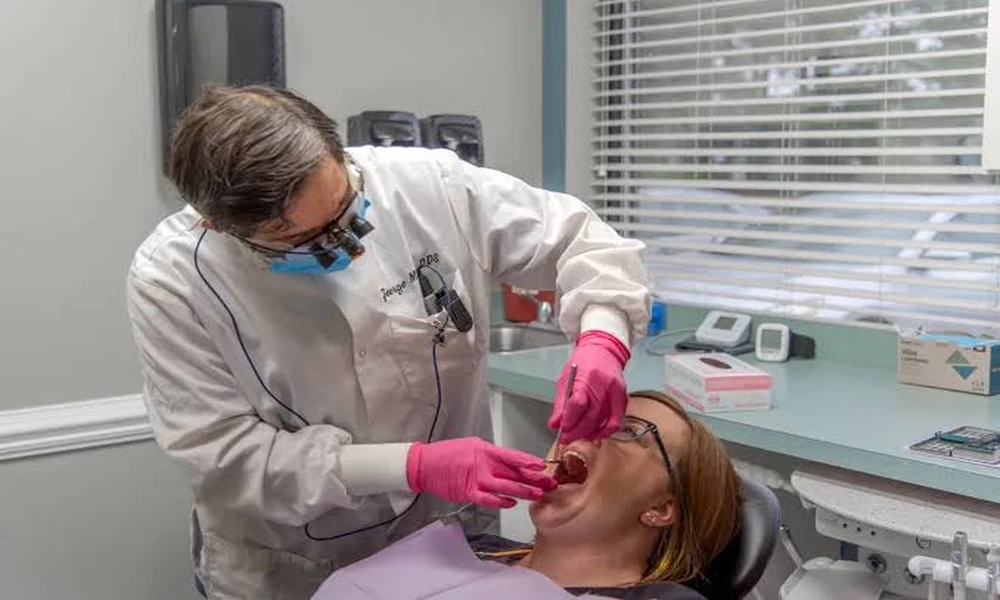
You sit in the chair, someone says they want to take images, and suddenly the visit feels more technical than you expected. That can be unsettling, especially if you already came in worried about pain, cost, or hearing that something needs treatment. Most people do not want a lesson in equipment. They want to know what is happening in their mouth, whether the test will hurt, and if it actually helps. If you want to explore comprehensive dental care in Englewood Cliffs, it can also help to understand why these images are recommended.
That is where modern dental center technology earns its place. Tools like intraoral cameras and 3 D scans are not there to complicate your visit. They help your dental team see more, explain more clearly, and plan care with fewer guesses. A good digital dental imaging process often means earlier detection, better fitting restorations, and a clearer sense of what you are agreeing to before treatment starts.
Intraoral cameras make small problems easier to see
An intraoral camera is a small handheld device that takes close up images inside your mouth. It helps show cracks, worn fillings, plaque buildup, gum changes, and spots that are hard to see with a mirror alone. If you have ever been told you need dental work and felt unsure, this is often the first tool that makes the recommendation feel concrete. You are not just hearing about a problem. You can see it.
That matters because confusion creates stress. When people do not understand what a dentist sees, they often delay care. A small cavity becomes a larger filling. A cracked tooth becomes a crown or an extraction. The camera does not replace an exam, but it gives context. It turns a vague explanation into something visible and easier to trust.
Many academic and clinical programs also use imaging technology to improve both learning and patient care. The University of Minnesota describes how technology supports stronger communication and treatment planning in dental settings, which reflects what many patients experience during a modern visit. You can read more about that in this piece on connecting technology, education, and patient care.
3 D scans help plan treatment with more precision
Three dimensional scans give a more complete view than standard two dimensional images. In a dental center, these scans are often used for implants, wisdom teeth, bite analysis, orthodontics, airway evaluation, and complex root or bone issues. If your case is straightforward, you may not need one. If your anatomy is less predictable, a 3 D image can reduce uncertainty in a way that benefits both diagnosis and treatment planning.
This is especially helpful when symptoms do not match what a basic exam shows. You may have pressure, pain when chewing, or repeated issues with the same tooth, yet the source is not obvious. A 3 D scan can reveal hidden infections, root fractures, bone loss, or the exact position of impacted teeth. That can prevent treatment that misses the real cause.
Research continues to examine how newer imaging methods improve dental diagnosis and planning. One recent study indexed by PubMed discusses current findings on advanced dental imaging and its clinical use. You can review it here: advanced dental imaging research.
Better imaging can also mean fewer surprises during treatment
Surprises are expensive. They also wear people down. You agree to one procedure, then halfway through you hear there is more decay, less bone support, or a fit issue with the restoration. Sometimes that cannot be avoided, but better imaging lowers the chance of it. When the team can assess the tooth, gums, roots, and surrounding structures more clearly at the start, treatment plans tend to be more accurate.
This does not mean every high tech tool is needed for every patient. A child with a simple cleaning does not need the same imaging as someone planning implants. The value is in matching the tool to the problem. Good care is not about using more technology. It is about using the right technology when it changes the quality of the diagnosis or the safety of the treatment.
If imaging is part of your visit, ask what the team is checking for, how the image changes the plan, and whether there are other options. You are allowed to want plain language. MedlinePlus offers a useful overview of dental X rays and what they show, which can help you understand how imaging fits into routine and more complex care.
Dental imaging tools differ in what they show and when they help
| Technology | What It Shows Best | Common Uses | What You Experience |
|---|---|---|---|
| Intraoral camera | Surface details of teeth and gums | Cavities, cracks, worn fillings, gum irritation, patient education | A small camera moves around the mouth, usually quick and comfortable |
| Standard dental X ray | Areas below the surface, including roots and bone | Decay between teeth, bone loss, infections, tooth development | Brief imaging with protective positioning and minimal discomfort |
| 3 D scan | Teeth, roots, bone, nerve paths, and spatial relationships | Implants, impacted teeth, complex diagnosis, surgical planning, orthodontics | You stand or sit still while the scanner rotates around your head |
For many people, the main difference is clarity. An intraoral camera helps you see what is happening on the tooth. A standard X ray helps the dentist see what is happening below it. A 3 D scan helps the team understand how everything fits together before they treat it.
Small steps make dental technology easier to navigate
Ask what decision the image will support. If a scan or image is recommended, ask what problem it is meant to confirm or rule out. That keeps the conversation focused and helps you understand the value of the test.
Ask to see the images yourself. Most people feel calmer when they can connect the explanation to something visible. A close up photo of a cracked filling or a 3 D view of an impacted tooth often makes the next step easier to understand.
Ask how the findings affect timing and cost. A small issue caught early may be easier and less expensive to treat. If the image shows that treatment can wait, that matters too. You deserve a clear sense of urgency, options, and likely costs.
Modern dental center technology works best when it makes care clearer
You do not need to become an expert in imaging equipment to make good decisions about your care. You need a team that uses technology to explain, not confuse, and to plan, not oversell. The best use of oral scanning technology and other digital tools is simple. It gives you a clearer picture of what is going on and what comes next.
If you are scheduling a visit at a dental center, ask how they use intraoral cameras, 3 D scans, and other imaging tools during exams and treatment planning. Clear answers are a good sign that the technology is serving you, not the other way around.
