
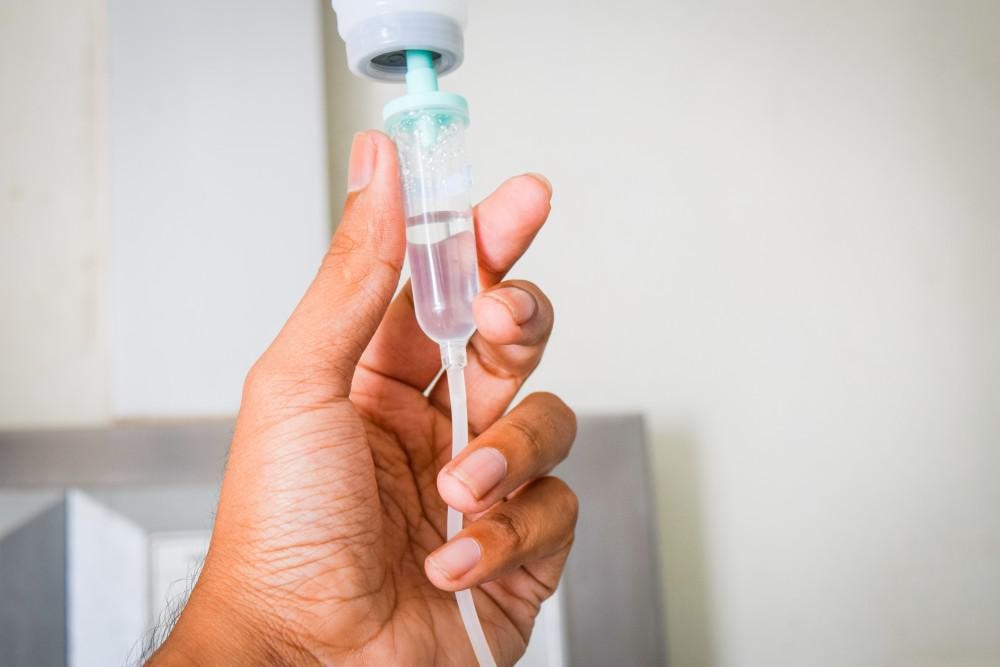
Have you ever wondered why there are different colours on the packaging on the IV fluids you see in the hospital or when you watch dramas and movies? Most certainly you already have a hunch that it is because not all IV fluids given to patients are probably not the same due to the variety of colour and writing labelled on the IV bag or bottles. The question now is, what are the types of IV fluids and what is the exact use of it in medicine to help treat patients?
Generally, IV fluids are divided to 3 main types based on their concentration or tonicity. These are isotonic, hypotonic and hypertonic fluids. Although 90% of patients hospitalised received an IV, most may not fully understand why they are receiving it and what kind of IV they are getting. Fret not, this article would make it simple for you to understand so that the next time you are wondering what IV you are receiving, you can directly ask healthcare professionals for further explanation with confidence. This article is meant to be a guide and any enquiries arise should be discussed with your healthcare providers.
1- Isotonic IV fluids
An isotonic IV solution has the same solute concentration as in the blood plasma. This type of fluid is used to increase fluid volume of the body that has been lost due to surgery, dehydration or loss of blood such as in trauma. This causes the red blood cell not to shrink or swell. Common isotonic fluids used in the hospital setting are normal saline (0.9% NaCl, NS), 5% Dextrose in Water (D5W) and Lactated Ringer’s Solution (LR). Normal saline is often used alongside blood products through blood transfusion to a patient. It is also used to replace sodium losses such as in burn injuries and trauma. D5W is often avoided in patients with risk for intracranial pressure such as bleeding in the brain, a tumour, high blood pressure and stroke. LR is used to correct dehydration and patients with imbalance of the pH blood, specifically metabolic acidosis.
2- Hypotonic IV fluids
A hypotonic IV solution has a lesser concentration of solutes than plasma. This type of fluid is made to bring fluid from the bloodstream into the cells and tissue. This helps the body to excrete body waste in a much more efficient way. Simply said, it is a fluid used to avoid patients from experiencing dehydration. A hypotonic IV fluid is also used to treat patients with high levels of sodium in blood (hypernatremia) and to help lower high levels of potassium in blood (hyperkalemia) in concurrent cases. Common types of hypotonic fluids include 0.45% normal saline (half NS), 0.225% normal saline (Quarter NS) and 2.5% Dextrose.
3- Hypertonic IV fluids
A hypertonic IV solution has more concentration of solutes than plasma. This type of fluid is designed to move fluids into the bloodstream to dilute electrolytes. This is also known as a volume expander. These types of fluids usually contain simple sugar called dextrose made from corn. Common types of hypertonic fluids are saline solution >0.9%, 3% NaCl, 5% NaCl, Dextrose solutions > 10%, D10W, D20W, D50W, Dextrose 5% in 0.9 Normal Saline (D5NS), Dextrose 5% in 0.45% Normal Saline (D5 ½ NS) and Dextrose 5% in Lactated Ringer’s (D5LR). There are many uses of a hypertonic IV fluids such as treatment of low level of sodium (hyponatremia), to treat severe level of low blood sugar (hypoglycaemia) especially in patients with diabetes, to treat starvation by providing calories and free water and lastly, for diuresis effect.
