
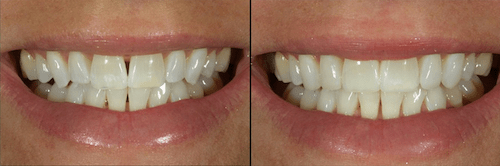
For an endless list of reasons, people have turned to the option of composite tooth bonding or dental bonding as a means to improve their smile or to fix an aesthetic problem. To be clear, this issue runs deeper than fixing the bond between you and your teeth as a means to repair some broken relationship wherein your commitment to oral hygiene has been deemed subpar; although, that’s not as farfetched as it sounded when you read it just now. The bonding is essentially a dental procedure that involves resin, and this resin is able to harden when exposed to a certain type of light.
The significance and usefulness of this comes from the fact that the resin is applied directly to teeth, and it is little more than a strong, plastic material whose durability and appearance are somewhat comparable to the calcified strength and veneer of your teeth. The resin, after all, shares the same hue as your teeth, so it is often used to repair chipped teeth; however, the conditions for which dental bonding is applied are quite ubiquitous.

Reasons to Consider Composite Tooth Bonding
The dental bonding process is a means by which dentists fix a variety of concerns. For example, it is hardly uncommon for people to experience various forms of tooth decay, and of course, the most common form of tooth decay is a cavity. Indeed, in this instance, the very same, aforementioned resin is used to fill a cavity to repair the teeth in question. Another reason to consider dental bonding, though, was also mentioned previously, and that is the all-too-common instance of chipped teeth. Many people often find themselves in situations where they chip a tooth, and of course, it’s always near the front because those are the teeth most susceptible to such calamities. Very few people are willing to leave their teeth looking this way, so the missing fragment of a tooth is often replaced by this hardened resin.
In many cases, people get fed up with the discoloration of their teeth. Any of a thousand factors could potentially contribute to the discoloration of enamel (e.g. generally poor oral hygiene habits, smoking, etc.), but the resin used in dental bonding can sometimes be a means dentists use to remedy the problem aesthetically. When it comes to cosmetics, though, there are many other reasons people prefer to opt for dental bonding in fact; one of which is simply unsightly gaps between teeth. Many rely on the approach of dental bonding as a dependable way to fill in these gaps, and a dentist who is good at this will likely be able to accomplish it without giving you muppet-mouth.
The Procedure Itself
Whatever your reason for deciding to go the composite tooth bonding route, you can know what to expect from the process in advance. There’s no reason to fear any pain, but it does help to know up front that drills are typically involved in this process, which is not something many patients want to take them by surprise. A patient will usually be anesthetized, however, if the purpose of the procedure is to fill a cavity, and that’s the situation in which drilling is necessary. Of course, cavities are among the most common reasons for dental bonding to be used, so it bears explaining that there’s a good chance drilling will be your reality but that you won’t feel a thing. This isn’t the only reason you might be anesthetized, though, because anesthesia is just as necessary for chipped teeth in the event that the target area is near a nerve ending.
The actual bonding process starts with the application of what is called a conditioning liquid to the tooth, and the dentist will see to it that the target tooth is roughened up. This helps make the resin adhere properly. The resin is then molded to the tooth and smoothened out to give the tooth its optimal shape. The dentist then becomes a lot cooler to you at this point because he or she employs a blue laser of sorts to harden the resin in place. All in all, the procedure lasts anywhere from half an hour to a whole one, and then, you’re good to go.
