
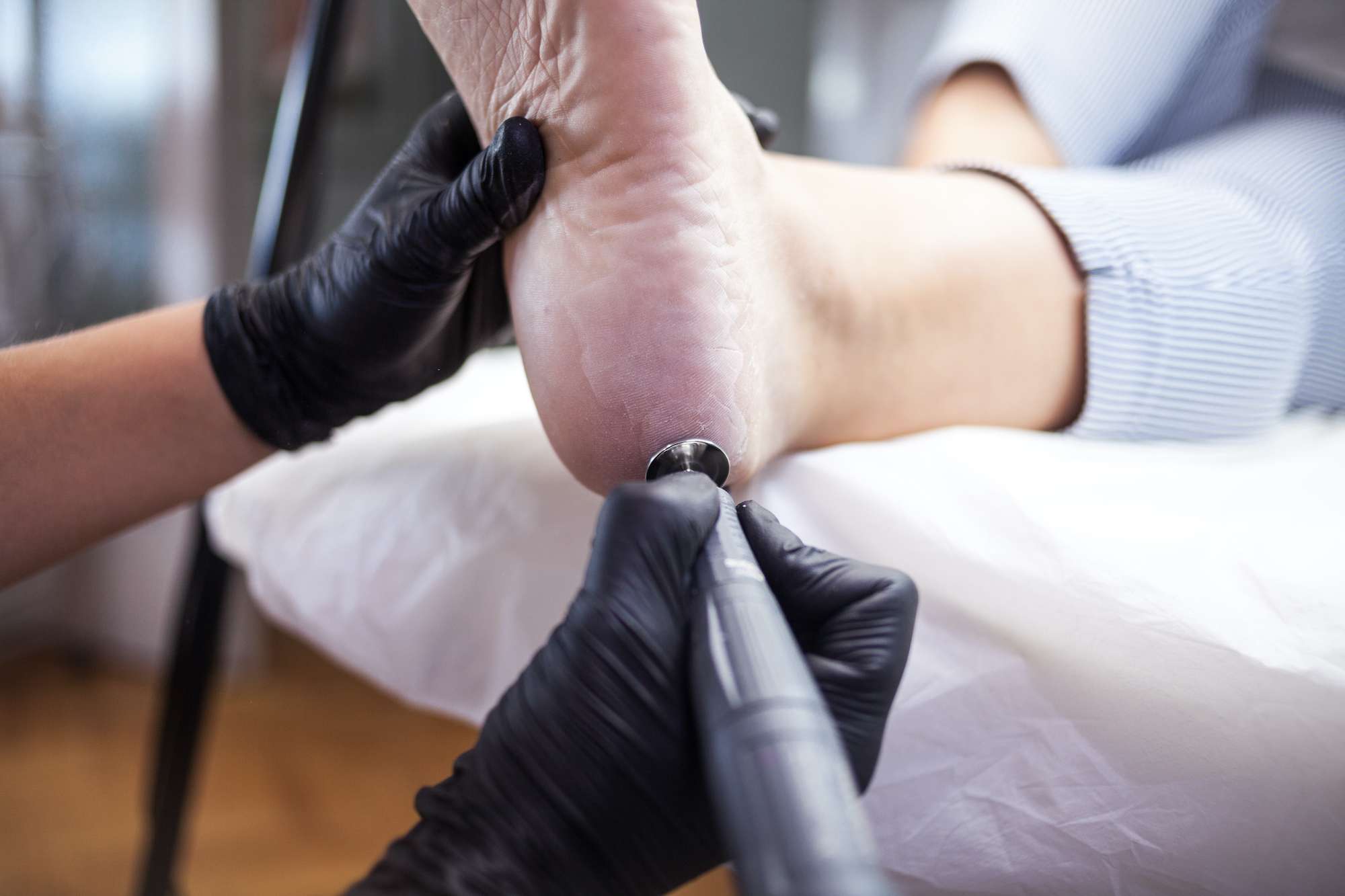
Why are corns and calluses treated?
Corns and calluses are excruciatingly painful. This might range from mild discomfort to severe pain. Pressure on the fragile underlying tissue beneath the corn or callus causes this pain. The pressure or rubbing that generated the corn or callus presses on the hardened tissue, which is conveyed to the soft tissue and causes pins or discomfort.
Podiatrists and chiropodists treat corns and calluses to alleviate pain and discomfort.
Treatment principles
Because the pain or discomfort is produced by a mass of hardened tissue pressing into the soft underlying area of the foot, the ideal technique to treat a corn or callus is to remove both: the source of the pressure and the mass of hardened tissue with as little harm to healthy tissue as possible.
The basic causes
One of the most critical components in treating a corn or callus is determining what caused it in the first place. Before removing the corn or callous, removing the source of the rubbing or pressure is critical. This is due to two factors.
First, because this pressure or rubbing formed the corn or callus, any benefit from treatment will be reversed if the underlying cause is not eliminated.
Second, the corn or callus formed in the first place to protect the underlying tissue from rubbing or pressure. Suppose your podiatrist or chiropodist removes this protective layer without removing the cause. In that case, the delicate underlying tissue will be subjected to the detrimental effects of pressure or rubbing directly against soft and healthy tissue.
Treatment for a Callus
A callus is a thickened clump of dead skin generated by rubbing or pressure on a portion of the foot or toes. For example, a bony protrusion on the inside of the foot pressing against something on the outside of the foot, such as ill-fitting footwear or another toe, causes this pressure.
The dead skin layers comprising the callus are discoloured, usually yellow. A skilled podiatrist or chiropodist can remove this with a scalpel in extremely thin slices, ensuring that the callus is eliminated without injuring the underlying healthy tissue.
Although this may sound uncomfortable, it is not if the healthy tissue is left alone. As a result, an expert is required!
Because there are no nerve cells in the thickened, dead layers of skin that make up a callus, removing it does not affect the patient. As a result, when these layers are carefully scraped away with a scalpel, it is essentially just cutting through dead protein, similar to removing nails or hair.
Because the podiatrist or chiropodist is merely removing dead tissue, there should be no bleeding or infection risk.
Typically, just one therapy is required. Patients are usually requested to return in 6 to 8 weeks to confirm that the area is healing well and that no signs of recurrence have emerged. However, a callus can sometimes be severe and require more than one treatment cycle. Furthermore, if the underlying reason has not been completely treated, there may be indicators at the follow-up that the callus is returning, requiring additional treatment.
