
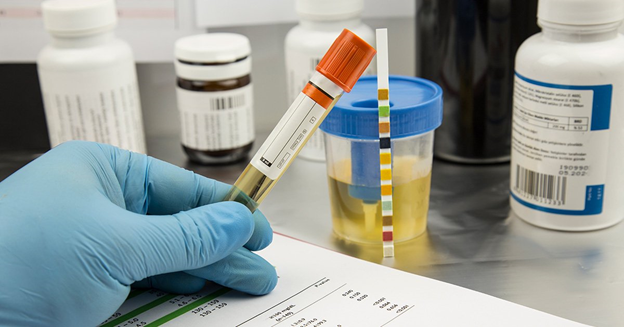
A false drug screen result can happen. According to studies, certain drugs or medications are among the mediums that can cause a false-positive test result, and specimens for the screens being tampered with are a common factor in these false negatives. Statistically, these things may happen in as many as five to ten percent of cases. False negatives happen ten to fifteen percent of the time. People want an accurate drug screening, and Medical Review Officers or MROs have a vital role in ensuring that people get it.
Working with an MRO
MROs or Medical Review Officer is the center point of an effective drug screening program and the point of contact of all subjects involved in the testing: the collection site, employer, donor, laboratories, and, if applicable, federal and state agencies.
In short, a Medical Review Officer receives, as well as reviews non-negative lab drug screens and evaluates them whether it has a justifiable health reason or find out if the sample substitution or adulteration has happened. These professionals do this by following proscribed protocols to ensure employee confidentiality and chain of custody.
How these screening works? Visit this site for more information.
Who will decide whether or not to involve a Medical Review Officer?
If a company has workers who perform safety-sensitive jobs that are regulated by DOT or the Department of Transportation, the decision to use this kind of service from MDOs has already been made for them. The Department of Transportation regulations, especially in 49 CFR Part 40.123 Subpart G, show all Medical Review Officers’ requirements in regulating drug screening.
For a non-regulated test that companies undertake under their own organization policy or in compliance with city or state laws, people may have an option whether or not to use these professionals, depending on what the law says. But, even if they are not mandated by state laws, using Medical Review Officers is an excellent practice to make sure that the screens are accurate, for the company’s peace of mind and that of their workers, as well as to minimize the risk of legal liability. The use of MROs dramatically enhances the reliability and validity of the drug screening process.
The process can help make sure that it is fair to the subject and offer more protection to the agency or company in any case of future litigation because of a positive result where the subject may have actually had legitimate explanations. It is these professionals’ task to make sure that the integrity of the screening, and without a Medical Review Officer, there is no assurance that it is fair and accurate.
Examiners versus Review Officers
Before discussing the description of the MRO’s responsibilities, training, and roles, workers usually wonder if there’s a difference between review officers and examiners. FMCSA or the Federal Motor Carrier Safety Administration describes the difference between the two:
MRO is a licensed doctor responsible for reviewing and receiving lab results generated by the company’s drug-testing protocol. Medical examiners are licensed, registered, or certified, according to the applicable city or state regulations and laws, to perform physical exams. They may include doctors of osteopathy, medicine, assistants, advanced practice nurses, and chiropractic doctors. That is why both professions are different from each other.
Medical Review Officer Processes and time requirement
Regulated screening requires the subject to provide a urine sample, which is separated into two vials (or split testing). Laboratories use the two-testing methods. If both tests are positive, the results are then reported to the assigned MRO. The lab performs sample validity testing to find out if the urine was adulterated or contaminated. The sample is then stored in labs for at least one year.
To know more about urine collection, check out https://www.hopkinsmedicine.org/health/treatment-tests-and-therapies/24hour-urine-collection for details.
A positive result from the lab in either non-regulated or regulated drug screening doesn’t necessarily mean the applicant or employee has misused illegal substances. Nor does the lab finding a substituted, adulterated, or invalid test automatically mean that the person has tampered with the sample. Physicians with detailed knowledge of every possible legitimate medical explanation – the MRO has the final say.
These professionals will:
Check all the necessary documentation
Interview the subject to investigate whether or not they have valid medical explanations for non-negative tests
If the initial test shows a negative result, the findings are confirmed, and the screening result is then sent to the company. If the initial test is positive, the Medical Review Officer will contact the subject to see if they are taking any drugs or medications or have legitimate explanations for positive results (usually within the day or 24 hours).
If the subject does not answer, the officer may leave three voicemails at most. The subject is given three days or 72 hours to send a response. If the subject does not respond within the allotted time, the officer notifies the company to have the test subject contact them.
These professionals can only characterize the screening as “non-negative” or needing more examination of the company and can’t say the test shows a positive result. Transit of the sample may take one day. Lab screening may take up to a couple of days if drug substances are found in the submitted sample.
It is a person’s right: ethics and privacy
Privacy of the test subject is very important. A certified and registered medical review officer will take every possible step needed to make sure that the test subject’s privacy, such as administrative and implementing procedures, physical and technical controls.
Access to the test subject’s information is extended only to people who require it to fulfill their job duties. Companies have the right to demand and expect ethical conduct by their MRO. Rules and regulations prohibit these professionals from having any close relationship with the laboratory or any workers that can create a conflict of interest.
That is why these professionals rarely interact with the company, the test subject, as well as the people conducting the urine drug testing. This job can be pretty tough, but knowing that people can get a fair and accurate test can be very satisfying.
